




Marco CartolanoTelegram & GazetteView Comments
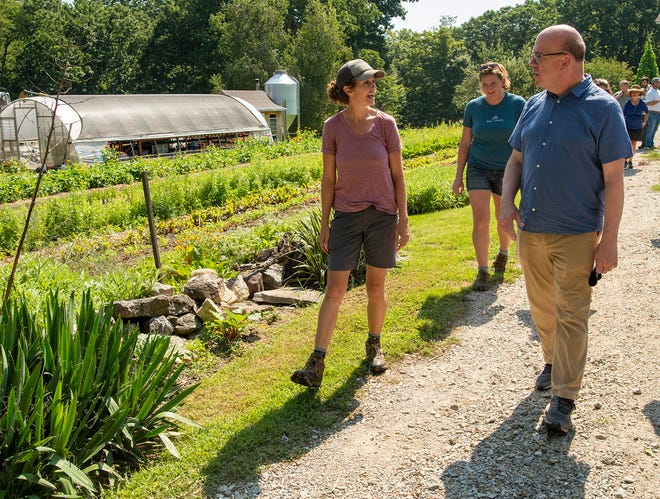
LEICESTER — U.S. Rep. James P. McGovern said Massachusetts farms that accept benefits programs are an important part of fighting food insecurity during his tour of a Leicester farm Thursday.
The Worcester Democrat visited Cotyledon Farm as part of his two-day tour of farms in his district, his 11th annual farm tour.
McGovern also visited Growing Places in Leominster and Global Village in Grafton on Thursday. On Wednesday, McGovern toured farms in the western portion of his district, which has around 1,800 farms.
McGovern said that the farms he toured took Electronic Benefits Transfer (EBT) cards for payment from recipients of the Supplemental Nutrition Assistance Program (SNAP) and are involved in the Massachusetts Healthy Incentives Program (HIP), which puts money back in EBT cards when the recipient buys healthy food.
“Good food shouldn’t just be accessible to people of means. Good food should be accessible to everybody. It’s a fundamental human right,” McGovern said. “I love coming to these farms because I admire the skill it takes to be a farmer — I would probably last a minute-and-a-half on this farm before I said ‘enough.’ “
Programs such as SNAP and HIP help both residents who need to get nutritious food and farmers who get more business from the programs, McGovern said.
Winton Pitcoff, director of the Massachusetts Food System Collaborative, said that July was the first month when sales through HIP were over $1 million.
Amanda Barker, owner and operator of Cotyledon Farm, said food banks or food pantries will often purchase bulk food where producers may receive less money than from a direct purchase or a community-supported agriculture (CSA) arrangement.
“Direct-to-sales is the best possible relationship for both the consumer and the producer,” Barker said.
Cotyledon Farm is a 60-acre farm that specializes in mixed vegetables and perennial herbs and primarily uses a CSA model.
Recognition of New England and Massachusetts agriculture in Washington, D.C., had grown over time, McGovern said.
As a member of the House Committee on Agriculture, McGovern said that he has had to speak about the agricultural opportunities in the state, and he wants to bring Secretary of Agriculture Tom Vilsack to Massachusetts to hear from farmers about areas where they feel the federal programs need more flexibility in addition to possible new programs that better fit New England.

McGovern has also advocated for a new White House Conference on Food, Nutrition, Hunger and Health, which he said should include agriculture and farming.
While McGovern said the original 1969 conference made progress on food insecurity and created initiatives such as the Women, Infants, and Children (WIC) program, he said it had flaws that came from not bringing in a diverse array of voices that should be addressed in a future conference.
McGovern also spoke of wanting to not just involve the U.S. Department of Agriculture in a conference, but every federal agency such as the U.S. departments of transportation and energy as well as farmers in the private sector and nonprofits.
“We want there to be a more holistic view. We need to connect the dots. Because, quite frankly, the status quo isn’t good enough and there are too many people in this country who are hungry,” McGovern said. “It was not just because of the pandemic. Before the pandemic, 37 million people in this country were hungry. We all should be ashamed of that fact and we could do something about it.”
Ashley Randle, deputy commissioner of the state Department of Agricultural Resources, said that the state has supported funds for food insecurity grant projects.
Randle said that money secured infrastructure improvements for state farmers such as refrigeration. Farmers have also received more support than ever before from USDA programs during the COVID-19 pandemic, she said.


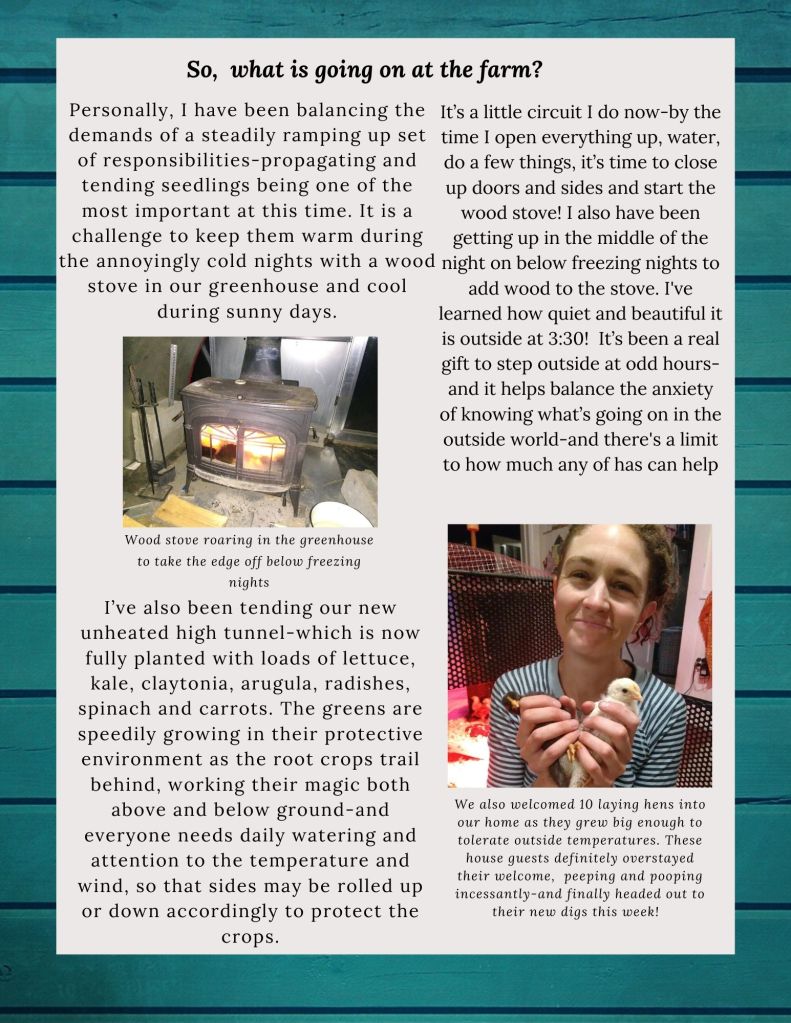


Amanda Barker, M.S. ’11, leads grass roots efforts to helpApril 16, 2020
By Kathryne Sonnett

As the spread of Covid-19 continues, the need for personal protective equipment (PPE) for first responders and health care workers is growing. Amanda Barker, M.S. ’11, a member of the Worcester nonprofit makerspace Technocopia, realized that she and her colleagues had the ability to help.
Barker created the Worcester Face Shield project, a partnership of makers ramping up production to create face shields to protect local health care providers against infection.
“I don’t have some personal connection other than seeing that there was a need,” Barker says. “The sense of urgency was very clear as we started to hear from friends and family about their experiences in healthcare. The corner-cutting people had to do just to show up to work was horrible.”
Seeing the methods the Charlestown Face Shield project is using to create PPE, Barker realized that she could do the same thing in Worcester. “We’ve been communicating with people working in Charlestown about materials and sourcing, and they’ve been developing and perfecting the process of producing the shields. We are following suit,” Barker says.
While the materials used to make face shields are not what the Technocopia artists typically work with, Barker realized they have the skills to make them and just needed to find the components.
Although the members of Technocopia were unable to meet about PPE in person because of social distancing restrictions, the project brought together engineers and experienced material scientists, along with tinkerers with 3D printers who wanted to help.
Among Technocopia staff and members, seven 3D printers are running in individual homes, printing head bands. Barker is taking the lead on another face shield design that uses a plastic sheet and foam head band and does not rely on 3D printing.
“Everyone began pooling resources, sharing who they know and what they know how to do, purchasing materials to make what we could, and it started from there,” says Barker.
According to Barker, Lauren Monroe, co-executive director of Technocopia, had been contacted by Salmon Health to see if they could offer support in producing face shields.
As the Worcester group is ramping up production, Barker is getting extensive help from her network of local activists to collaborate and share resources. Joshua Swalec, a local artist blacksmith who owns Ferromorphics Blacksmithing, is working on components at his Millbury shop. Artists from the New Street Glass Studio in Worcester are also forming the shields, and members of The Worcshop are cutting elastic and polycarbonate components.
“Josh and I are both metal workers and have access to the shop and we have tools. The design has a number of components but it is not overly complicated so with the right tools and people and time it is doable,” Barker says.
Barker arrived in Worcester to attend Clark, earning a master’s degree in environmental science and policy in 2011. As part of a graduate school project in 2010, she created Nuestro Huerto, a still-thriving urban farm in Worcester that is now a growing space for local families.
“My time at Clark gave me context, language, and connections I may not otherwise have had access to. I learned that change must happen at the human and community level so that’s where I began my work — and where I continue to do so,” Barker says.
She moved to Leicester in 2017 and is the owner and operator of Cotyledon Farm, a community-based agriculture program where produce is grown by and for members.
The farm has become the “central command” point for the shields — some are assembled there and other makers bring completed units there to be counted and distributed to health care workers. “People drop off face shields one day, and we send them to different places the next,” Barker says.
The process of producing the face shields is constantly evolving. “We are figuring it out as we go along,” says Barker. “Our goal is 2,000 shields and we are working with other groups in the area to see what we can come up with. We are all activists in different realms and have networks of people who are willing to answer the call.”
The work is truly a grass roots effort, she adds, as the group relies solely on donations to cover the costs of the materials. Barker says they are doing their best to reimburse people who have been purchasing materials with the funds that are raised through private donations or through donations to assist in face shield production through Technocopia’s website.
The Worcester Face Shield Facebook page has a link to the intake form where health care workers can contact Barker to request shields, or she can be contacted directly via email at abarker1006@gmail.com.



.
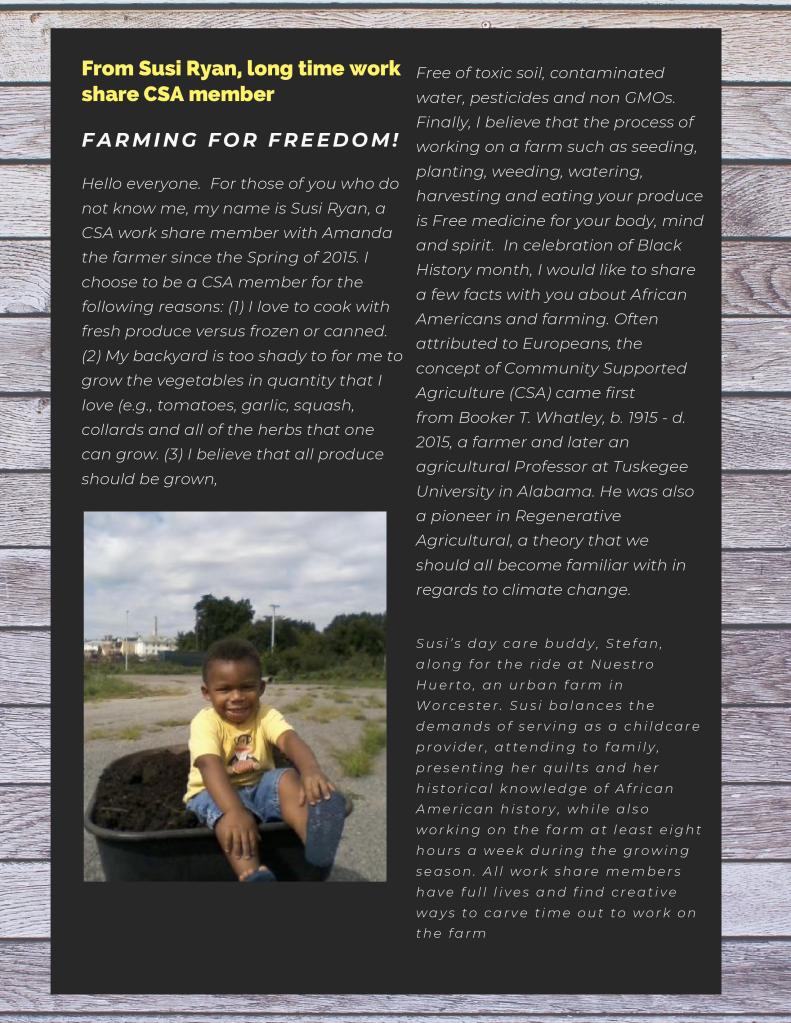
(Amanda Barker) “as a Clark University graduate school project in 2010, she described her approach to agriculture as “reckless enthusiasm.”
read more of the article Farms are falling but more young producers’ in region -a recent write up in the Worcester Telegram.

 Cotyledon Vegetable Farm